JAK–STAT signaling in immune-mediated diseases
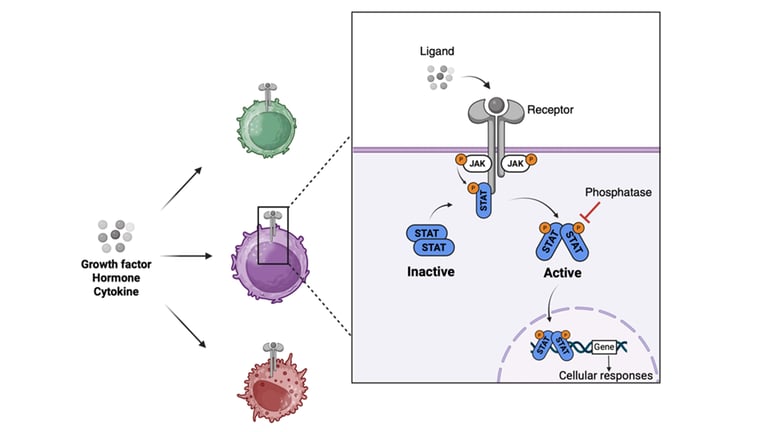
Cytokines, hormones and growth factors control how immune cells develop, survive and respond to danger. Many of these signals are transmitted through the Janus kinase–signal transducer and activator of transcription (JAK–STAT) pathway. In healthy tissue, this network is tightly regulated and helps maintain a balance between protective immune responses and immune tolerance.
When JAK–STAT signaling becomes dysregulated, immune cells can either overreact or fail to respond. This imbalance contributes to a wide range of conditions, including autoimmune and inflammatory diseases, graft versus host disease, and cancer. Because of its central role, JAK–STAT is a major target for small molecules and biologics, yet current tools often provide only static, end point readouts of pathway activity.
Biological background
STATeLights technology
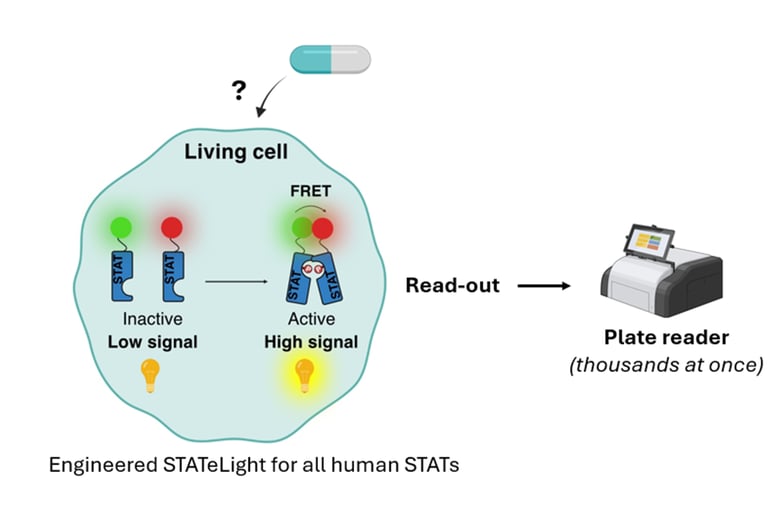
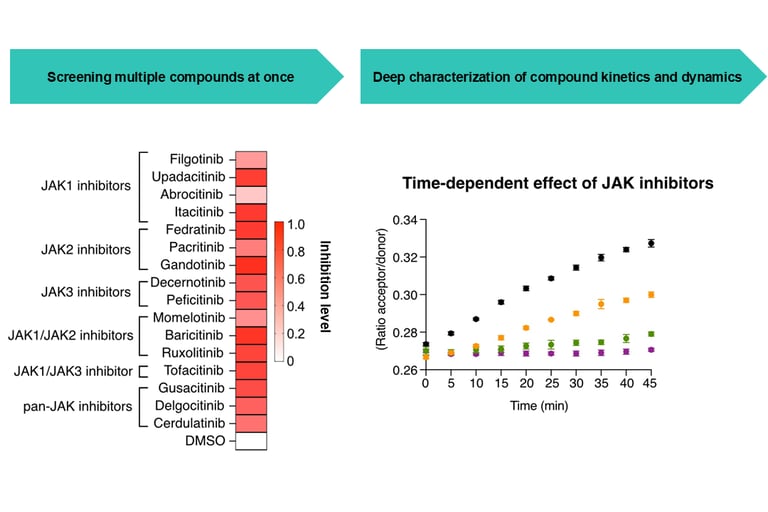
STATeLight biosensors, embedded in engineered cell lines, translate JAK–STAT activation into a live-cell fluorescent signal. This allows us to monitor pathway activity over time, quantify drug effects with high sensitivity, and compare how different compounds modulate specific STAT proteins. By capturing the dynamics of signaling rather than a single snapshot, STATeLights help researchers and drug developers better understand the mechanism of action and de-risk candidate selection early in discovery.